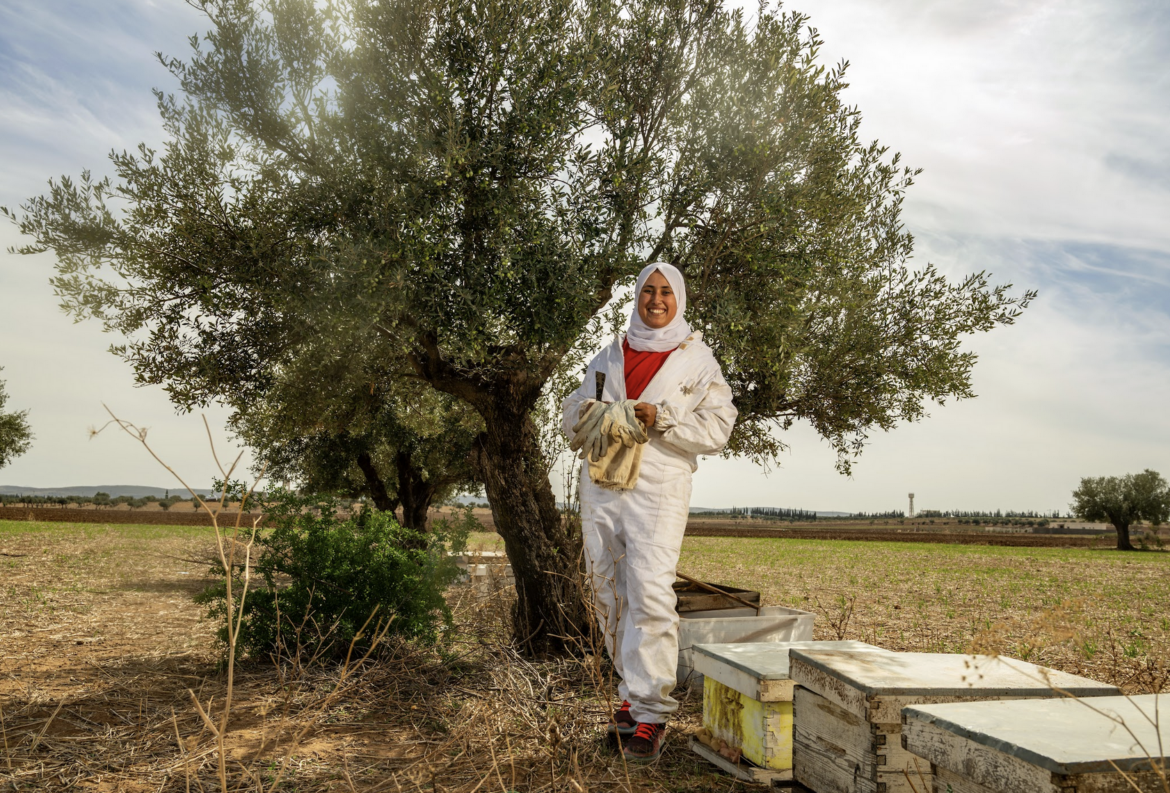
Hela Boubaker stands smiling among her beehives, a figure of quiet resolve bathed in the golden light of a Tunisian morning. She has transformed a near-fatal bee sting into a mission that is redefining apiculture. As the first Arab woman certified in bee venom extraction, she developed a patented, non-lethal device that harvests venom with precision and care, earning her a national patent in June 2023. Hela is also the president of the Amal Association for Rural Women, where she trains beginners in beekeeping while blending science, sustainability, and compassion. From just 20 hives in 2018 to a thriving project today, her work proves that true innovation can be as gentle as it is revolutionary.
How did a life-threatening allergy become the spark for your beekeeping mission?
My allergy was not a barrier—it was a doorway. Rather than running from it, I chose to understand it, to heal, and to use it to help others facing the same fear. I was born in Gafsa and raised in Borj El Amri, with no ties to farming, yet this challenge led me to a life shaped by nature and purpose. The moment I joined a beekeeping training center, fear transformed into action, and I realized I could create something truly meaningful for the environment—and for the world.
What sparked the creation of your bee-venom extraction machine?
It began with urgency. Allergy treatments abroad were impossibly expensive, and I refused to accept that healing should be a privilege. I wanted a solution rooted here—accessible, safe, and within everyone’s reach. That determination ignited the idea for a new, bee-friendly extraction system that could change lives.
What proved to be the most difficult part of developing it?
Protecting the bees—because without them, none of this matters. Traditional extraction methods can harm or stress colonies, and that was never an option for me. I brought engineers into the process, and together we created a gentle electrical stimulation technique that gathers venom without harming a single bee. It’s innovation with conscience, guided by respect for the hive.
What does it mean to be the first Arab woman to create this innovation?
It is a profound honor for me, my family, and my country. But this achievement is the result of years of persistence, education, and the values my parents instilled—creativity, independence, and resilience. Every recognition feels priceless.
What does a typical day with your bees look like?
I leave before dawn, sometimes traveling 180 km to my apiaries. I observe the bees, inspect each hive, check resources and brood, and ensure the colony’s health. Before leaving, I meditate and read verses from the Quran. Each day blends science with spirituality.
How can Tunisian women play a larger role in beekeeping?
Women bring care, precision, and patience—qualities essential for high-quality honey and by-products. The field is male-dominated, but I hope my work shows women can lead and elevate Tunisian beekeeping globally.
What health benefits do your honey and bee venom offer?
Honey nourishes and heals, perfect for children, breastfeeding mothers, and skincare. Bee venom has strong therapeutic potential for allergies, arthritis, and autoimmune conditions. Apitherapy is powerful but underused—I aim to change that.
What makes Tunisian honey unique?
Tunisia’s rich flora gives honey unmatched aroma and flavor. Thyme, eucalyptus, and jujube honey are prized for taste and medicinal value. Our honey reflects the land, climate, and biodiversity—it’s nature in a jar.
Beyond innovation, what truly drives your mission?
I want to make bee venom accessible while protecting the bees. I use apitoxin to create natural, organic skincare products, and my work supports environmental responsibility, the Sustainable Development Goals, and rural communities. My mission is a balance of innovation, sustainability, and social impact.
What impact do you hope to make on future women leaders?
I want to empower young people—especially women—to master venom extraction, machine building, and the innovative work our field offers. My journey shows that passion and persistence can open unexpected doors. Ultimately, I dream of a sustainable ecosystem where beekeeping and environmental protection grow together. Saving bees means safeguarding biodiversity, and I hope to make Tunisia a global model for ethical, innovative apiculture.
If readers take one lesson from your story, what should it be?
Never give up on your dream. If you can’t run, walk; if you can’t walk, move slowly—but keep going. Perseverance always leads to somewhere worth reaching.
Text by Suna Ahmed