
From the delicate keys of childhood piano practice to the grandeur of international opera stages, Fatima Al-Hashmi has forged a pioneering path as the UAE’s first mezzo-soprano. Her voice—refined, powerful, and deeply expressive—has carried the story of a nation from local festivals to the Bolshoi Theatre, weaving heritage and identity into every note.
Today, as Head of Music at the Ministry of Culture, she bridges artistry with leadership, championing mu sic as both performance and purpose. Through her work with the Emirati Musicians’ Association, she nurtures emerging talent and affirms that dreams, when met with courage, can shape a nation’s soul.
Music has been part of your life from an early age. What is it about music that resonates so deeply with you and shapes who you are today?
Music has always felt like a second language to me, one that speaks even when words fall short. From a young age, it was a safe space for expression, healing, and imagination. It shaped me by teaching discipline, empathy, and the courage to be vulnerable. It’s not just what I do, it’s who I am.
Representing the UAE on global stages, how do you carry both your cultural identity and the emotions of your audience through your voice?
Every time I sing, I carry the spirit of my homeland within me. My voice becomes a bridge—between tradition and innovation, between East and West. I’m deeply aware that I’m not only performing music; I’m telling a story about who we are as Emiratis, our strength, our grace, our evolving identity. At the same time, I aim to connect emotionally with the audience, to allow them to feel seen and heard through the music, no matter where they’re from.
Having sung in over 15 languages—each with its own rhythm, soul, and story—what does it mean to you to give voice to cultures beyond your own?
It’s a great responsibility and a profound honor. When I sing in another language, I don’t just pronounce the words, I study the culture, feel its nuances, and try to embody its history and emotions. Giving voice to other cultures is my way of saying: “I see you, I hear you, and I honor your story.” It makes my own voice more human and connected to the world.
Looking back at your journey—from piano student to mezzo-soprano to cultural leader—what was the most unexpected lesson that shaped you as both a woman and an artist?
That vulnerability is strength. True artistry comes from honesty. As a woman in a pioneering role, I’ve learned that grace, empathy, and authenticity are not weaknesses—they are my greatest tools.
Many young Emiratis dream of a career in the arts but may fear limitations or judgment. What do you wish someone had told you when you were starting, and what do you tell young artists today?
You don’t need permission to follow your passion. Your voice is valid, even if it sounds different from what’s around you. To young artists, I say: your identity is your power.
Don’t let fear shrink your dreams. The path may be unpaved, but you’re not alone—and one day, someone will see what’s possible through you.
If you could dedicate a single performance to one memory, one person, or one moment in your life—what would it be, and why?
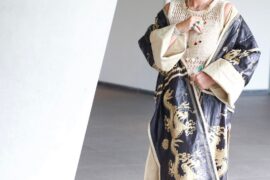
Paris 2018, when I first sang on stage in my traditional dress, representing my country with a genre few had seen from someone like me. It was my master’s graduation project at Sorbonne. That moment was bigger than me—it was for every girl who dreams differently, for every voice waiting to be heard. It was the beginning of a story I am still writing.
Text by Suna Ahmed.